radio
Differences
This shows you the differences between two versions of the page.
| Both sides previous revisionPrevious revisionNext revision | Previous revision | ||
| radio [2026/05/17 22:54] – dsheen | radio [2026/05/18 01:28] (current) – [Radome] dsheen | ||
|---|---|---|---|
| Line 8: | Line 8: | ||
| * Amateur radio (half-duplex on 440 MHz, 1296 MHz, and others) | * Amateur radio (half-duplex on 440 MHz, 1296 MHz, and others) | ||
| + | |||
| ===== Feeds ===== | ===== Feeds ===== | ||
| Line 22: | Line 23: | ||
| ===== RF Slipring ===== | ===== RF Slipring ===== | ||
| + | |||
| + | An RF slipring is used to pass low power rx/tx signals through the azimuth rotation. It has channels spanning DC to 40GHz. other than the center channel, these are not broadband and can only be used over a limited range of frequencies. The characteristics of these channels mean that they do not lend themselves well to simple filter band descriptions, | ||
| + | |||
| + | {{ :: | ||
| + | |||
| + | Note that the center channel (DC to 40GHz) is reserved pending the installation of appropriate switches and filter tees. However, it will likely become the default path for all half-duplex systems in order to minimize switching/ | ||
| + | |||
| + | |||
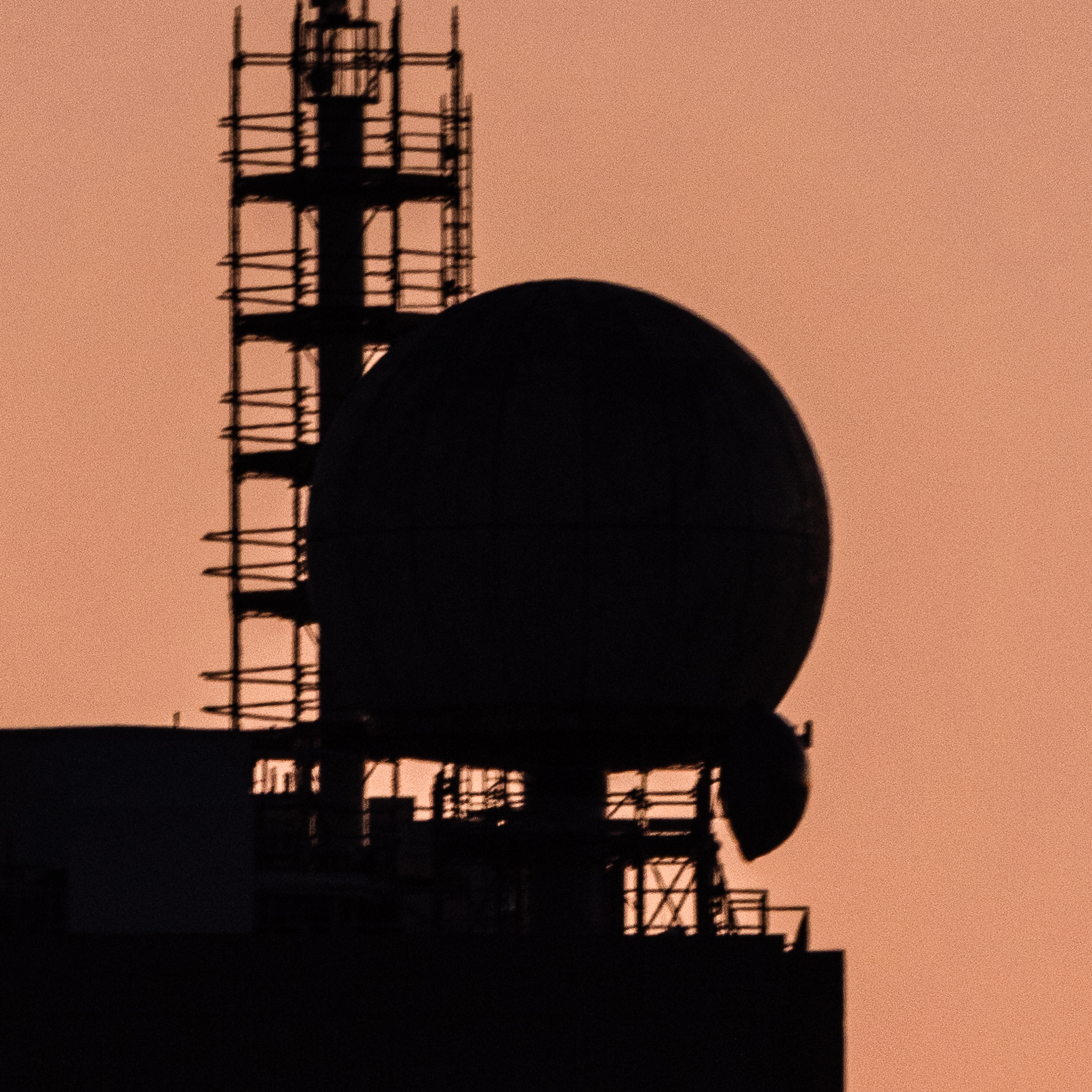
| + | ===== Radome ===== | ||
| + | |||
| + | The radome itself is not perfectly transparent at all frequencies. Its estimated transmission loss is given by the plot below, but the exact performance depends on the exact parameters of the telescope beam and the concentration of energy at different angles of incidence on the radome panels. | ||
| + | |||
| + | |||
| + | {{ :: | ||
| + | |||
| + | {{ :: | ||
radio.1779058446.txt.gz · Last modified: by dsheen